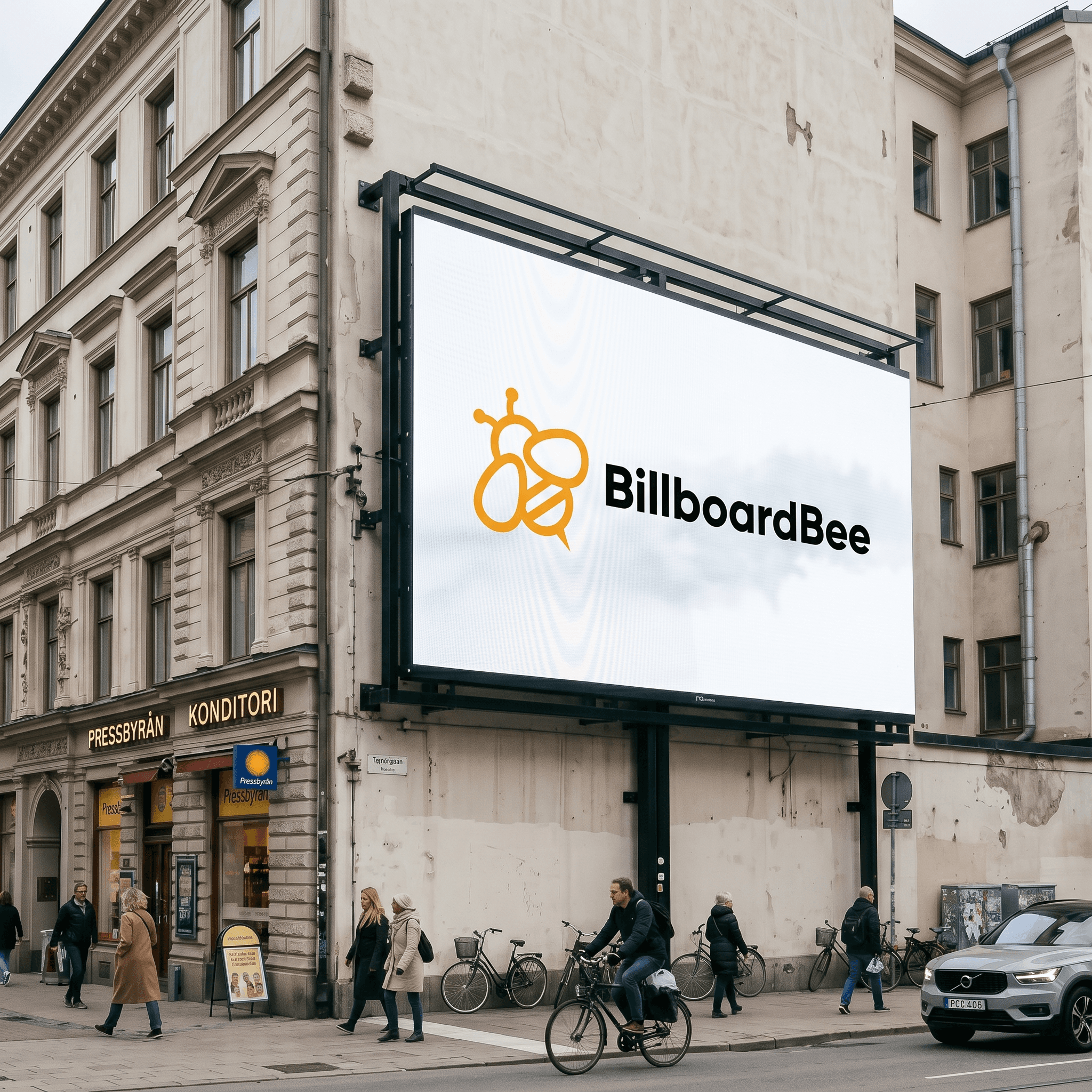
Train station advertising
Format

All about Train station advertising

Large digital screens and posters at central stations – built for high-frequency commuter reach.

Train station advertising gives brands a premium presence in the everyday flow of Swedish travel. From Stockholm Central and Gothenburg Central to Malmö Central and strong regional hubs such as Uppsala and Lund, station media combines scale, repetition and context: people are moving, waiting, navigating and noticing. For busy marketing teams in Sweden, it is one of the clearest ways to build broad urban reach while staying close to retail, finance, tech and media audiences.

Key facts

Train station advertising in the Swedish market

Stockholm Central footfall
200,000+ visitors per day

Jernhusen describes Stockholm Central together with Cityterminalen as the Nordic region's busiest rail station.

Gothenburg Central footfall
90,000+ travellers per day

Applies to Göteborg Centralstation, Centralhuset and Nils Ericson-terminalen combined.

Malmö Central footfall
55,000+ visitors per day

A strong southern Sweden hub with commuter and regional traffic.

Jernhusen station network
~500,000 station visits per day

Across its Swedish station portfolio, giving station media national relevance beyond the three largest hubs.

Quick facts

Formats & specs

Typical specifications for this format.

Format
Digital vägg, 72-ark, backlit
Exponering
Hög frekvens, multiple impressions per pendlare
Kampanjlängd
2–4 veckor

Typical placements

  • Stockholm Central
  • Gothenburg Central
  • Malmö Central
  • Regional stations

Best suited for

  • Finance
  • Tech
  • Retail
  • Media
Deep dive

How it works: Train station advertising

Why train station advertising works in the Swedish market

In Sweden, the strongest station environments are not just transit points; they are daily decision-making spaces. Commuters pass through them on repeat, business travellers arrive with intent, and shoppers use them as city gateways. That makes station media especially effective for brands that need both fame and frequency. The core strength is repetition: one commuter can see the same campaign several times a week across entrances, concourses, escalators and waiting areas. In practice, that means train station advertising often performs best when the objective is awareness, launch support or mental availability rather than one-off response alone.

Where the format is strongest

The anchor sites are the major Swedish rail hubs. Stockholm Central is the biggest rail environment in the Nordics and works well for national campaigns that need visibility at scale. Gothenburg Central gives strong western Sweden coverage, while Malmö Central adds southern reach and a cross-border business audience. Regional stations can then be layered in for extra weight in cities such as Uppsala and Lund, especially when the brief includes universities, office districts, retail catchments or high daily commuting. In many campaigns, the smartest approach is a hub-and-regional mix: one or two flagship stations for impact, supported by selected regional stations for frequency and geographic relevance.

Typical formats at stations

The station category usually combines digital walls, classic 72-sheet posters and backlit units. Digital walls are best when you want movement, dayparting or fast creative swaps. Large classic posters remain useful when you want full visual dominance with simple artwork and high repeat exposure. Backlit faces work particularly well in enclosed station interiors where lighting consistency helps the creative hold attention from morning to evening. Swedish media owners such as Clear Channel Sweden, JCDecaux Sweden and Bauer Media Outdoor all offer digital and classic OOH solutions in transit-adjacent environments, though inventory, station access and exact specifications vary by network and concession.

Best-fit categories and campaign goals

Train station advertising is especially effective for finance, tech, retail and media brands because these categories benefit from both trust and top-of-mind awareness. Financial services can use stations to build credibility and reach office commuters at moments tied to routine and planning. Tech brands benefit from large-format demonstrations, product launches and dynamic messaging. Retail advertisers can use station proximity to stores, city centres and shopping districts to support footfall. Media and entertainment brands often use station media to create quick fame ahead of premieres, subscriptions or live events. In the Swedish context, the format also suits public-sector information, mobility services and employer branding.

How Swedish buyers normally plan station campaigns

Most station campaigns are planned in waves of roughly two to four weeks, with heavier weighting on core commuter periods. Creative is usually kept short, bold and legible at a glance. For digital executions, many advertisers adapt messages by time of day, weekday or local context. A typical brief starts with city choice, station priority, audience need and format mix, then narrows into production specs and delivery timing. Buyers rarely think in fixed price tags alone; budget depends on station quality, number of faces, share of voice, campaign length and whether the buy is classic, digital, direct or programmatic. In Sweden, a practical benchmark is to think in tiers: flagship central stations command premium investment, while regional add-ons improve efficiency and local relevance.

Sweden first, Nordic-ready

For brands active across the Nordics, station media is also a useful bridge format. The commuter logic travels well across Stockholm, Oslo, Copenhagen and Helsinki: premium transit environments, repeated weekday exposure and strong city-centre context. That said, Swedish planning should still start with local movement patterns and station hierarchy rather than copying a pan-Nordic template. The best campaigns are adapted to each market's main mobility hubs, media-owner footprint and urban rhythm. For an English-speaking marketing manager based in Sweden, the key takeaway is simple: if you need broad urban coverage with repeated exposure among people who travel, work and shop in the country's biggest city centres, train station advertising is one of the most reliable transit formats available.
FAQ

Common questions about train station advertising

How much should I budget for train station advertising in Sweden?

Budget by market tier rather than fixed list price. Stockholm Central and other flagship commuter environments sit at the premium end; Gothenburg, Malmö and selected regional stations can be used to balance reach and efficiency. Final cost depends on station quality, number of units, campaign length, share of voice and whether you buy classic posters, backlit inventory or digital screens.

What affects the price most?

The main drivers are city, exact station, format type, inventory quality, campaign duration and how concentrated the buy is. A high-impact digital wall in a main concourse costs materially more than a smaller regional poster package. Short tactical bursts can work, but two to four weeks is often the planning sweet spot for building frequency among commuters.

Is station media better bought as a standalone or as part of a wider OOH plan?

Usually as part of a wider OOH plan. Station media works best when it carries the high-frequency commuter layer, while street, mall or roadside formats extend total reach. In Sweden, many advertisers combine central stations with city-centre digital networks from media owners such as Clear Channel Sweden, JCDecaux Sweden or Bauer Media Outdoor.

BillboardBee-rådgivare
Talk to an advisor

Want to book train station advertising? We help you end-to-end.

Our Swedish advisors know the market inside out. Call or message us and you'll get a hand-picked list of available train station advertising placements, realistic price ranges and production tips — no strings attached.

  • Hand-picked list of available placements in your target cities
  • Realistic price ranges based on recent real bookings
  • Artwork specs, file sizes and safe zones for every format
  • Swedish support team, reply within 1 h on weekdays

Sources & further reading

  1. 01.Reklam och event | Jernhusen
  2. 02.Stockholms Centralstation | Jernhusen
  3. 03.Göteborgs Centralstation | Jernhusen
  4. 04.Malmö Centralstation | Jernhusen
  5. 05.Utomhusreklam & DOOH i Sverige | JCDecaux Sverige

Market data and reach figures are updated continuously. We primarily use Swedish and Nordic sources so the content reflects the market you actually operate in.

Ready to book?

Start your campaign

Find available train station advertising placements across Sweden and book directly in the dashboard.