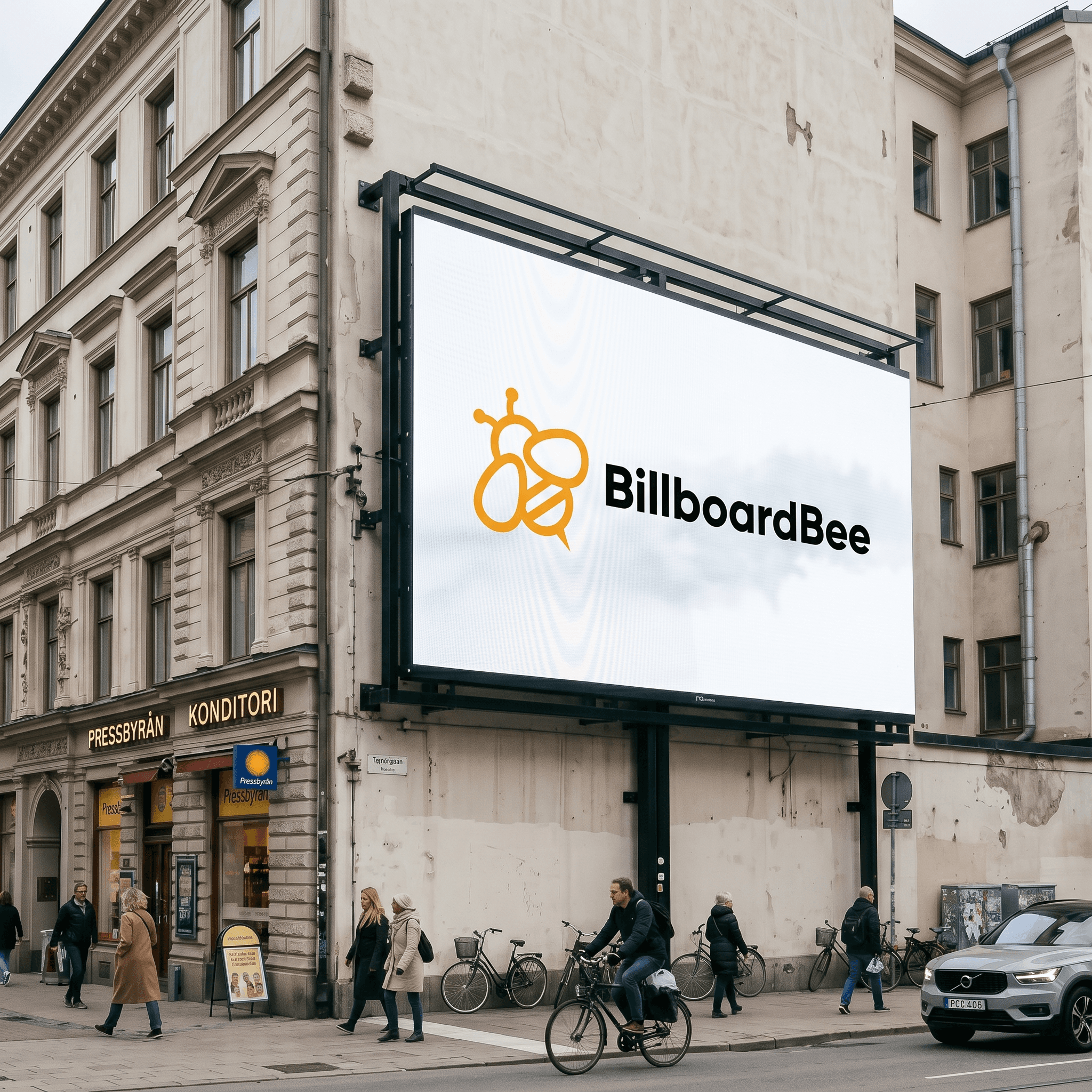
Bus shelter
Dictionary · OOH

Bus shelter

The street-level OOH format people pass every day.

Definition

In Swedish and Nordic out-of-home, a bus shelter is the classic poster frame integrated into a bus stop or similar street furniture. It is one of the market’s most common formats because it combines high visibility, repeated exposure and broad urban coverage in places where people wait, walk, shop and commute.

Also known as:bus shelter adMUPI
Key facts

Bus shelter in 60 seconds

Category
Format

Street furniture / OOH format

Common aliases
Bus shelter ad, shelter, MUPI

Terminology varies by market and media owner

Typical environment
Bus stops, city streets, retail corridors and commuter routes

Most often bought as a network, not one face

Swedish market role
A core urban reach format in Stockholm, Gothenburg and Malmö, with tactical value in Uppsala and Lund

Used in both classic OOH and DOOH plans

Deep dive

How it is used: Bus shelter

Definition

A bus shelter is a backlit advertising frame placed at or beside a bus stop, usually built into public street furniture. In practice, Swedish media owners often sell it as part of a shelter network rather than as a single stand-alone unit. The format is designed for close-range visibility in everyday urban movement and is widely used for brand campaigns, retail bursts, launches and public information. In English-speaking briefs you may also see bus shelter ad, while in continental usage the related term MUPI is sometimes used for city information panels and street furniture formats of similar scale.

How the format works in Sweden

In Sweden, bus shelter inventory sits at the heart of urban OOH planning because it delivers reach through repetition rather than one spectacular contact. Stockholm is the reference market, but the logic is similar in Gothenburg, Malmö, Uppsala and Lund: shelters are positioned along commuter corridors, shopping streets, neighbourhood centres and high-footfall intersections. JCDecaux Sweden markets classic and digital shelter networks in Stockholm and other major cities, while Clear Channel Sweden uses the Adshel naming across several street and transit environments. Bauer Media Outdoor brings broader national scale across both classic and digital OOH, which matters when a shelter-led plan needs wider geographic spillover beyond the biggest city cores.

Typical Swedish/Nordic specifications

The classic bus shelter unit is usually a portrait, backlit poster format with a glass-protected face, built for 24/7 visibility in dark winters and variable weather. In Sweden, the common benchmark is the Eurosize shelter family, alongside digital shelter screens that run in loops with share-of-time buying. Production requirements vary by media owner, municipality and whether the booking is static or digital, but advertisers should expect strict artwork templates, safety margins and installation deadlines. In Nordic practice, the same planning principles largely apply across Norway, Denmark and Finland, even if local product names differ.

Why marketers use it

For a busy Swedish marketing manager, the strength of bus shelters is simple: they deliver broad urban noticeability without forcing a premium-impact budget. They are visible to pedestrians, bus passengers, cyclists, drivers and nearby retail traffic at the same time. That makes the format especially useful for campaigns that need fast city coverage, repeated weekly frequency and proximity to purchase occasions. In central Stockholm, premium shelter networks are positioned for high frequency and comparatively efficient contact cost; in university and growth cities such as Uppsala and Lund, the format is often valued for reaching mobile, educated and frequently commuting audiences.

Buying logic, pricing and campaign role

Bus shelters are normally bought as networks, city packages or selected locations. Pricing depends on city, season, number of faces, exact placement quality, whether the product is classic or digital, and how exclusive the booking is. In Sweden, central Stockholm commands a premium, while Gothenburg and Malmö often offer strong urban impact at a lower entry level; Uppsala and Lund are typically used tactically for regional reinforcement or academically skewed audiences. Digital shelter products add flexibility through dayparting, dynamic creative and, increasingly, programmatic access. In most Nordic plans, shelters sit between large roadside formats and transit interiors: more local and street-close than a billboard, but broader and more public than many niche transit formats.

Market context in Sweden and the Nordics

The Swedish OOH market is concentrated around major urban corridors and professionally managed municipal contracts, which is one reason shelter advertising remains so important. JCDecaux states that it offers OOH and DOOH in Sweden’s 25 largest cities, while Bauer Media Outdoor says it reaches 82% of the population weekly through 120,000 classic and digital surfaces across around 200 municipalities. Sweden’s largest municipalities also explain why shelter formats matter commercially: SCB lists 2025 populations of about 999,000 in Stockholm, 613,000 in Gothenburg, 368,000 in Malmö and 250,000 in Uppsala, while Lund is notable as a highly educated university market rather than purely a scale play. Across Norway, Denmark and Finland, the same shelter logic holds: dense urban mobility, strong public-space media contracts and growing digital conversion keep bus shelters central to Nordic OOH planning.
FAQ

Common questions about Bus shelter

How is bus shelter advertising priced in Sweden?

Usually by network size, city, placement quality, season and format type. Central Stockholm tends to be the premium benchmark, while Gothenburg and Malmö often offer strong urban coverage at a somewhat lower level. Classic posters are generally easier to enter on a modest budget; digital shelter networks buy flexibility but can carry a higher effective premium.

Should I buy classic or digital shelters?

Choose classic when you want broad weekly presence and simple production. Choose digital when timing, message rotation, dynamic content or shorter tactical bursts matter. Many Swedish campaigns mix both: classic for street saturation, digital for flexibility and optimisation.

Is it sensible for a regional campaign rather than national?

Yes. Shelters are often one of the most efficient ways to own a city or regional cluster. For example, a campaign focused on Stockholm plus Uppsala, or Malmö plus Lund, can feel locally dominant without requiring a full national OOH rollout.

BillboardBee-rådgivare
Talk to an advisor

Not sure where to start? We help you.

Our advisors guide you through bus shelter — from first sketch to booked billboard. No commitment, no cost, no sales pressure.

  • Free format-fit and media-mix review
  • Example prices based on real Swedish campaigns
  • Production tips and spec sheets for your creative
  • Swedish customer service, reply within 1 h on weekdays

Sources & further reading

  1. 01.JCDecaux Sverige – Locations and networks
  2. 02.JCDecaux Sverige – Eurosize Bus Shelter Stockholm City product sheet · 2026-02-10
  3. 03.JCDecaux Sverige – Digisize Bus Shelter Stockholm 100 product sheet · 2026-02-10
  4. 04.Bauer Media Outdoor Sverige – company overview
  5. 05.SCB – Lägsta folkökningen på 25 år · 2026-03-21

Figures and market references are updated continuously. We primarily use Swedish and Nordic sources so the content reflects the market you actually operate in.

Explore more

The full dictionary at BillboardBee

We are building the clearest knowledge base for outdoor advertising – so every advertiser can make great decisions.