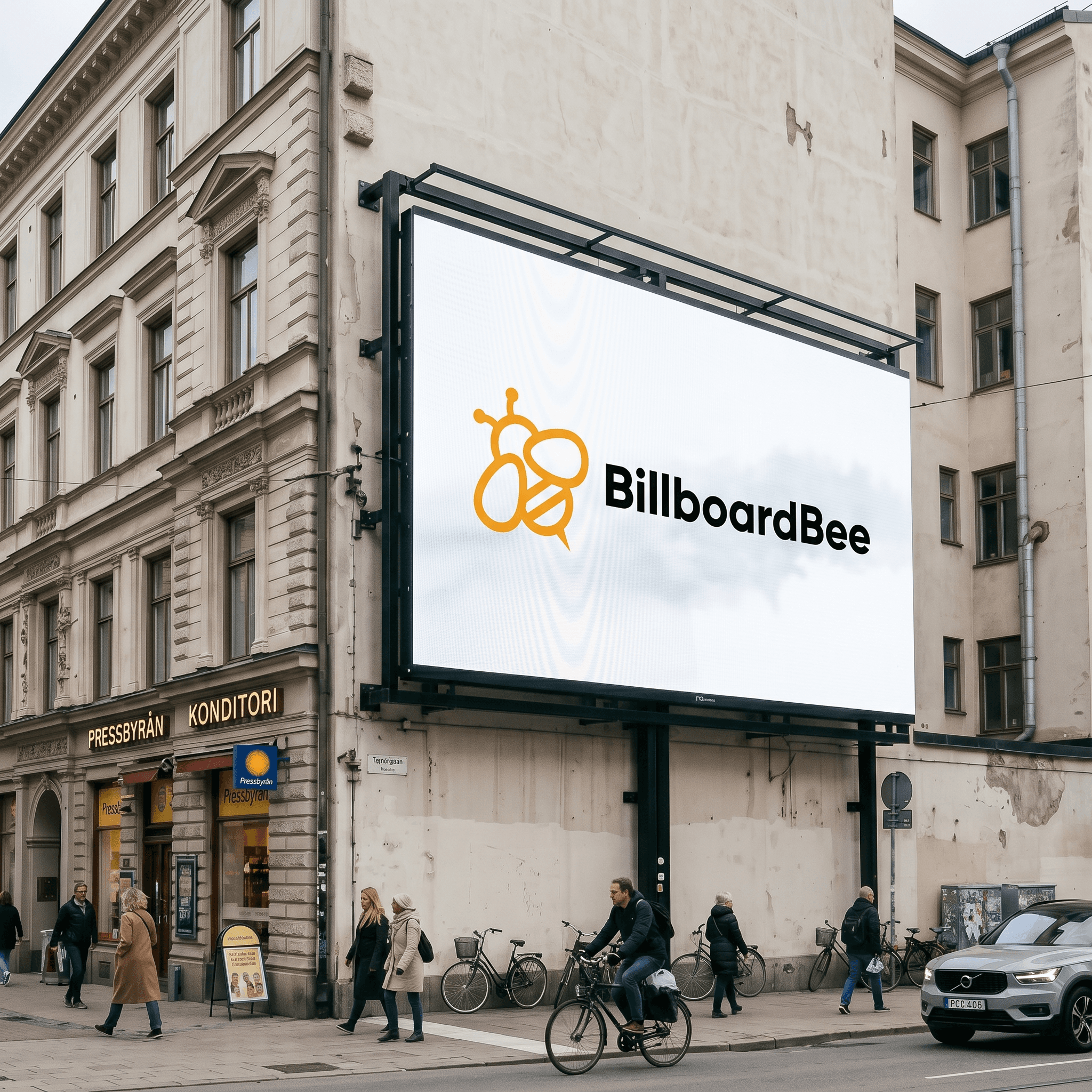
OOH vs DOOH
Comparison

OOH vs DOOH

Broad reach or agile optimisation? In Sweden, the best answer is often both.

Main axis

Classic out-of-home vs digital out-of-home

For Swedish advertisers, OOH is the broad category that covers all outdoor advertising, while DOOH is its digital subset. That distinction matters in practice. Across Stockholm, Gothenburg, Malmö, Uppsala and Lund, classic formats still deliver dependable reach, long visibility windows and strong city coverage, while digital networks are gaining ground thanks to faster copy changes, better audience planning and clearer reporting. The most effective choice depends less on hype and more on campaign goal, city mix, timing and how much flexibility the team needs.

Key facts

The difference in 4 lines

Definition
OOH covers all outdoor advertising; DOOH is the digital subset.

Useful when briefing agencies or comparing inventory across Swedish media owners.

Best fit for OOH
Broad reach, multi-format visibility and longer campaign periods.

Often stronger for brand building and always-on presence.

Best fit for DOOH
Fast creative changes, audience data and clearer measurement.

Well suited to tactical bursts, dynamic messaging and test-and-learn planning.

Nordic trend
DOOH is the faster-growth segment, with industry forecasts indicating roughly 20-25% annual growth in emerging programmatic DOOH activity.

Growth is strongest where digital supply, measurement and programmatic access are expanding.

Differences

How they differ

1

OOH is the umbrella for all outdoor advertising; DOOH is its digital subset

2

OOH includes both static posters and digital signs; DOOH is purely digital

3

OOH offers more format variety; DOOH gives better measurement and targeting

4

DOOH is growing fastest of the two – 20-25% CAGR in the Nordics

Recommendation

Which should you pick?

Pick OOH when

When a campaign needs broad reach across multiple formats over a long period.

Pick DOOH when

When you need rapid updates, audience data and provable measurement.

Deep analysis

OOH vs DOOH in detail

OOH is the umbrella; DOOH is the specialist

In the Swedish and wider Nordic market, OOH includes everything from classic posters and roadside billboards to transit panels, street furniture and digital screens. DOOH sits inside that universe and refers only to digital outdoor inventory. For a busy marketing manager, the practical difference is simple: OOH gives the widest menu of formats and booking structures, while DOOH adds speed, dayparting, dynamic messaging and stronger measurement options. Media owners such as Clear Channel Sweden, JCDecaux Sweden and Bauer Media Outdoor all operate across high-traffic urban environments, but the role each format plays can differ sharply by city, placement and campaign objective.

Where classic OOH still has an edge

Classic OOH often wins when the brief is broad awareness over time. If you need steady visibility across multiple formats, or want a longer campaign presence in major commuting and retail corridors, static inventory can be the more robust choice. In Sweden, that is especially relevant for citywide coverage in Stockholm, Gothenburg and Malmö, but also for efficient regional extensions into Uppsala and Lund. Production is less flexible once installed, yet the format can be well suited to brand building, launches with fixed creative and campaigns where continuity matters more than moment-to-moment optimisation.

Where DOOH pulls ahead

DOOH tends to outperform when timing, agility and accountability matter most. A retailer can rotate creative by hour, a public campaign can update messaging quickly, and a challenger brand can concentrate spend around selected moments, districts or audience flows. In Sweden, the market has also matured on measurement: Outdoor Impact 2.0 provides campaign planning and reporting using VAC, reach and frequency across both analog and digital inventory, while programmatic DOOH is becoming more available through major operators. That gives advertisers better proof points than classic posting alone can usually offer, even though strong site quality and creative discipline still matter more than dashboards on their own.

What growth in the Nordics means for planners

The digital side is growing faster than the classic side across the Nordic region. Swedish industry sources point to strong expansion in programmatic and digital outdoor, and Nordic operators are scaling digital estates in parallel with classic networks. A practical planning takeaway is that DOOH is becoming easier to buy, optimise and measure, but classic OOH remains strategically important because it offers format breadth, geographic spread and sustained visibility. In other words, DOOH is not replacing OOH; it is making the outdoor mix more flexible. For many Swedish campaigns, the smart decision is not OOH or DOOH, but which role each should play in the same media plan.

How to choose for a Swedish campaign

Choose OOH first when the task is long-run visibility, broad urban coverage and a format mix that can stretch from roadside to street furniture and transport. Choose DOOH first when the brief depends on rapid updates, audience-informed planning, tighter reporting or short bursts around selected times and places. In Stockholm, digital can be especially useful for dense commuter flows and tactical retail moments; in Gothenburg and Malmö, it can add flexibility to city-centre and shopping environments; in Uppsala and Lund, it can sharpen local relevance without requiring a full national rollout. For many brands, the most balanced answer is a classic OOH backbone with DOOH used to amplify key moments, messages or districts.
FAQ

Common questions: OOH vs DOOH

Is OOH usually cheaper than DOOH in Sweden?

Not automatically. In the Swedish market, classic OOH often delivers more continuous presence for the budget, while DOOH tends to price in flexibility, premium locations and digital share-of-voice. The right comparison is cost against campaign objective, not format label alone.

Which format is better for a tighter budget?

If the goal is dependable visibility over a longer period, classic OOH can be easier to stretch. If the goal is short, tactical impact in selected windows or locations, DOOH can be more efficient because you can concentrate delivery instead of buying full static coverage.

BillboardBee-rådgivare
Talk to a strategist

Still not sure? We match the choice to your brief.

Send us your audience, budget and campaign window and you'll get a concrete recommendation between OOH and DOOH — grounded in Swedish market data and similar past campaigns.

  • Recommendation based on real Swedish campaigns
  • Realistic CPM ranges for both channels
  • Combined-channel setup if it actually helps you
  • Swedish advisors, reply within 1 h on weekdays

Sources & further reading

  1. 01.JCDecaux Sweden – About us · 2025
  2. 02.Bauer Media Outdoor – Clear Channel expands over 120 new billboards in Sweden's largest cities · 2025
  3. 03.Outdoor Impact FAQ
  4. 04.JCDecaux Sweden launches programmatic buying via VIOOH · 2025
  5. 05.IAB Sverige / IRM – Programmatisk Handel 2024–2026 · 2025

The comparison is based on publicly available Swedish/Nordic market data, industry reports and aggregated bookings from the BillboardBee platform.

Ready to book?

Find the right board for your campaign

Explore our full inventory for both formats – or let our team help you choose the right one.